Disposable Vape Ban One Year On: What UK Vapers Switched To
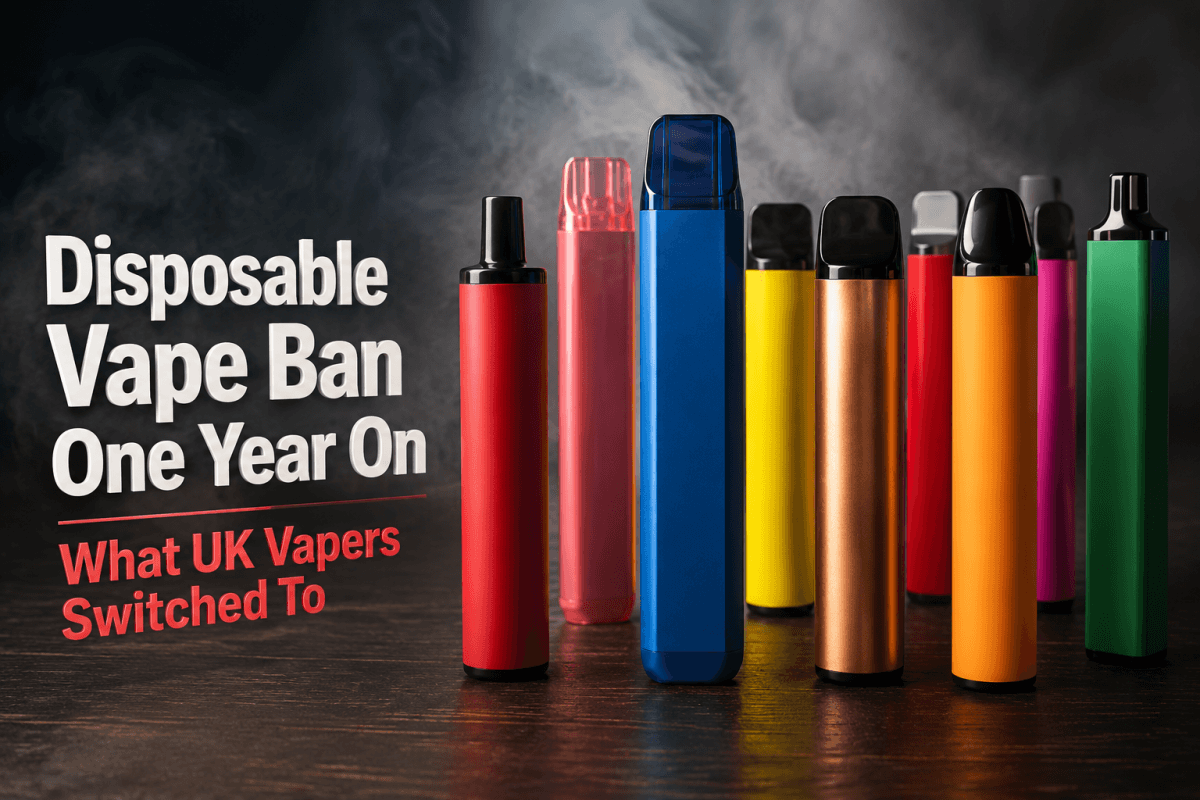
One year after the disposable vape ban, we look at what UK vapers actually switched to — and why refillable pods came out on top.
Tags Cloud
One year after the disposable vape ban, we look at what UK vapers actually switched to — and why refillable pods came out on top.
It's been over a year since the UK's ban on single-use disposable vapes came into force on 1 June 2025. So what actually happened? Did vapers quit, switch to illegal disposables, or move to legal alternatives? In this guide, we take a detailed look at where former disposable users actually landed, what each alternative looks like in practice, and how to work out which one fits your own habits.
A quick recap: what the ban actually covers
The ban applies specifically to single-use, non-rechargeable disposable vapes — devices designed to be thrown away once the e-liquid or battery runs out. It doesn't ban vaping itself, nicotine e-liquid, or rechargeable devices. That distinction matters, because it shaped exactly what vapers switched to: not away from vaping, but toward rechargeable formats.
The short answer: most vapers switched to refillables
The overwhelming majority of former disposable users moved to rechargeable, refillable refillable pod kits — devices that look and feel similar to disposables (compact, simple, low-maintenance) but use replaceable prefilled pods or refillable tanks instead of being thrown away after use.
Breaking down where vapers actually went
Prefilled pods: the closest like-for-like swap
For vapers who valued the simplicity of a disposable — no buttons, no refilling, just click in and go — prefilled pod kits have been the natural landing spot. Brands like Elf Bar, Lost Mary and SKE Crystal now offer rechargeable devices with snap-in prefilled pods that replicate the disposable experience almost exactly. You charge the device occasionally and swap the pod when it's empty, rather than throwing away the whole unit.
Refillable pods: better value long-term
A smaller but growing group moved to fully refillable pod systems, topping up with their own choice of nic salt e-liquid. It takes a bit more effort — you're manually filling the tank rather than clicking in a pod — but it works out cheaper per ml, a relevant consideration with the upcoming vape tax pushing e-liquid prices up regardless of format.
Sub-ohm kits: a minority, but a loyal one
A smaller segment of former high-puff disposable users (the 10,000+ puff devices) moved toward sub-ohm kits and mods, chasing bigger clouds and more customisable airflow. This group tends to be more experienced vapers who were already comfortable adjusting wattage and coil resistance.
Nicotine pouches: a tobacco-free alternative on the rise
A notable minority skipped vaping altogether and moved to nicotine pouches — discreet, smoke-free pouches like Velo, ZYN and Nordic Spirit. These appeal particularly to vapers in settings where vaping isn't practical, such as workplaces, flights, or venues with strict no-vaping policies.
Heated tobacco: a smaller niche
A much smaller group moved to heated tobacco products like IQOS, generally vapers who wanted something closer to the ritual of smoking without combustion. This remains a minority path compared to pod-based vaping.
What about people who just went back to smoking?
This is the outcome public health bodies have been most concerned about. While comprehensive national data takes time to compile, anecdotal retailer and pharmacy feedback suggests the vast majority of disposable users found a rechargeable alternative rather than relapsing to cigarettes — largely because the transition products were designed specifically to minimise friction. That said, a small proportion of former disposable users, particularly casual or social vapers who found the switch to rechargeable devices too much hassle, are believed to have drifted back to smoking or simply stopped using nicotine products.
What about illegal disposables?
Trading Standards enforcement has continued to target illegal disposable stock in the year since the ban. Buying from unregulated sources carries real risks — no TPD compliance, no quality control, and no guarantee of what's actually in the liquid. Illegally imported devices have also been found with inaccurate puff counts, non-compliant nicotine strengths, and inconsistent battery safety standards. We'd always recommend sticking to TPD compliant vapes from a registered UK retailer, both for legal certainty and for your own safety.
Cost and environmental impact: an unexpected upside
One consistent theme across the past year has been cost. Vapers who switched to refillable systems generally report lower ongoing spend than they had with disposables, since a pod or tank refill costs a fraction of a whole new disposable device. There's also been a meaningful reduction in vape-related litter and battery waste, which was one of the ban's core policy goals — disposables were a significant contributor to street litter and improperly discarded lithium batteries before the ban.
How to choose your own replacement: a step-by-step approach
Step 1: Identify what you actually valued about disposables
Was it simplicity, flavour variety, portability, or just habit? Your answer points toward a different alternative — simplicity and portability point toward prefilled pods, flavour variety points toward refillable systems with a wide e-liquid range, and habit alone might mean nicotine pouches are worth trying alongside vaping.
Step 2: Match your old puff count to a new format
If you used a low-puff-count disposable (600 puffs or fewer), a compact prefilled pod kit is the closest match. If you used a high-puff-count disposable (10,000+), look at higher-capacity pod kits or refillable tanks with larger e-liquid capacity.
Step 3: Decide between prefilled and refillable
Prefilled pods cost more per ml but require no manual filling. Refillable systems cost less per ml but need you to buy e-liquid separately and top up the tank yourself.
Step 4: Check flavour availability before committing to a device
Not every flavour from the old disposable range survived the transition. Check the specific brand's current pod or e-liquid range before buying a device, so you're not left without your preferred flavour.
How retailers adapted to the ban
Retailers had to move fast in the run-up to June 2025 — clearing disposable stock, retraining staff to guide customers toward alternatives, and in many cases restructuring entire store layouts and website categories around refillable and prefilled pod ranges rather than disposables. Shops that invested early in staff training on alternatives generally saw smoother customer transitions than those that treated the ban as a simple stock swap.
How the UK ban compares internationally
The UK's approach — banning single-use disposables specifically, while leaving rechargeable vaping largely untouched — is broadly similar to steps taken or being considered in Australia, France and parts of the EU, though the details differ. Australia's approach has been considerably stricter, effectively requiring a prescription for nicotine vaping products through pharmacies. France has moved toward a full disposable ban following a similar timeline to the UK's. The UK's model is generally viewed as sitting in the middle — restrictive on disposables specifically, but still treating vaping overall as a legitimate smoking-cessation tool rather than banning it outright.
A one-year snapshot: what the data suggests
- The majority of former disposable users are now using rechargeable prefilled or refillable pod devices.
- Nicotine pouch adoption has grown noticeably among both former vapers and former smokers.
- Illegal disposable stock remains a minority but persistent problem, concentrated in informal retail rather than registered shops.
- Vape-related litter has fallen in areas that tracked it before and after the ban, consistent with the policy's environmental goals.
Advice if you're still undecided a year on
If you haven't settled on a permanent alternative yet, it's worth trying a low-commitment starter kit before investing in a premium device — most starter kits cost less than a week's worth of the old disposables and let you test whether prefilled or refillable suits your habits before spending more. Pairing that with a small variety pack of flavours, rather than committing to a single large bottle, is the easiest way to find your new favourite without waste.
Not sure which alternative suits you?
If you used to vape Elf Bar or Lost Mary disposables, we've put together dedicated switching guides — see "Elf Bar Disposable Alternatives" and "Lost Mary Disposable Alternatives" below, which map old models and flavours directly onto their closest current equivalents.